
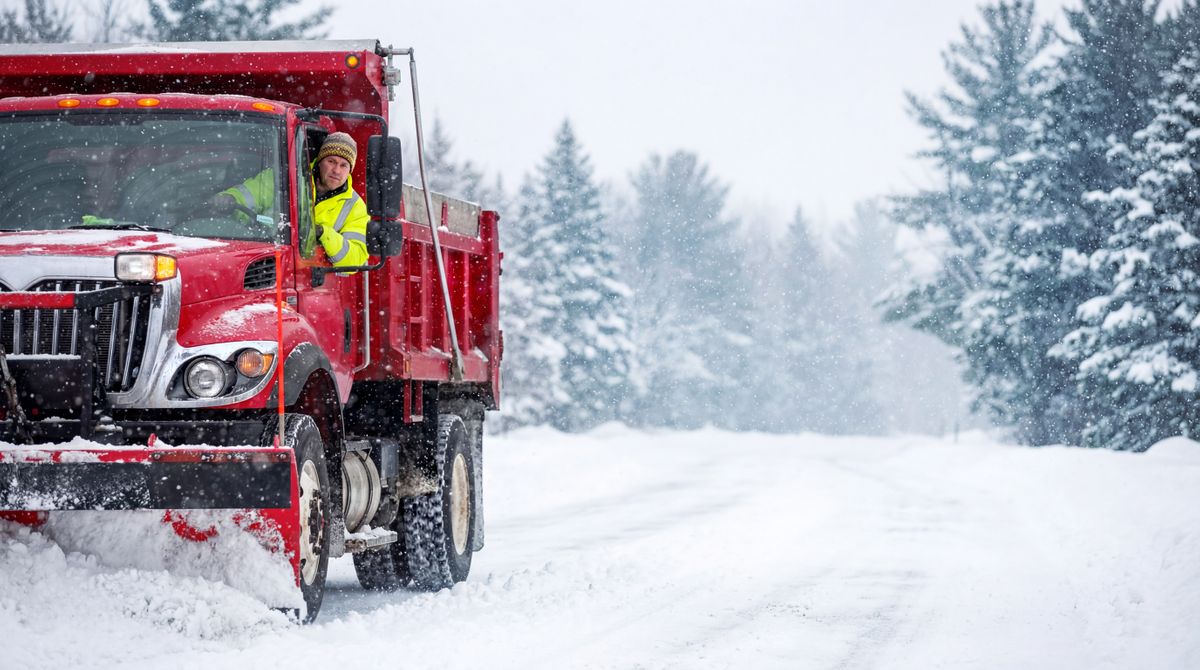
In Denver, snow removal challenges do not end once a parking lot is plowed or a roadway is cleared. As winter progresses and storms stack up, commercial properties often face a new problem: there is simply nowhere left to put the snow. Thunderbird Design works with Denver property managers who encounter this issue every winter, particularly after repeated storms compress available space and create visibility, drainage, and safety concerns. At that point, choosing between snow hauling in Denver and commercial snow stacking becomes a critical operational decision.
Denver averages more than 60 inches of snow per year, but the real issue for commercial sites is accumulation over time. According to the National Weather Service, Front Range winters frequently produce multiple storms in short succession, leaving little opportunity for snow piles to melt completely before the next event. As snow piles grow, they begin to interfere with parking capacity, pedestrian access, and even emergency routes. Understanding when to stack snow on-site and when to use off-site snow removal helps commercial properties remain functional and compliant throughout the season.
This article explains the differences between snow hauling and on-site stacking, when each option makes sense, and how professional snow management prevents mid-season disruptions caused by limited space.
Why Snow Volume Becomes a Mid-Season Problem in Denver
Repeated Storms and Freeze-Thaw Cycles
Denver’s winter weather pattern is defined by variability. Snow may melt partially during sunny afternoons, only to refreeze overnight. Over time, snow piles become denser, dirtier, and harder to manage. The Federal Highway Administration notes that compacted snow piles reduce drainage efficiency, increasing refreeze risk and surface damage.
From firsthand experience managing commercial winter operations, snow volume issues typically emerge after the third or fourth major storm, when initial stacking areas are already full and additional snowfall has nowhere to go.
Operational and Safety Impacts of Excess Snow
Large snow piles are not just an inconvenience. They can:
Reduce parking capacity
Block sightlines for drivers and pedestrians
Obstruct fire lanes and emergency access
Cause meltwater flooding and refreeze
The Insurance Information Institute identifies poor winter maintenance, including unmanaged snow piles, as a contributing factor in many slip-and-fall and vehicle-related claims.
Understanding Commercial Snow Stacking
What Is On-Site Snow Stacking?
Commercial snow stacking involves relocating snow within the property boundaries to designated pile areas. This is typically done using plow trucks and skid steers to push or carry snow to the edges of lots or unused sections of the property.
On-site stacking is the most common approach early in the season because it is efficient and cost-effective. Many properties begin winter with structured commercial snow removal plans that designate stacking zones in advance.
Benefits of Snow Stacking
On-site snow stacking offers several advantages:
Lower cost compared to hauling
Faster execution during active storms
No off-site transport logistics
For properties with ample space, stacking can manage snow volumes effectively for much of the winter.
Limitations of On-Site Stacking
Stacking becomes problematic when:
Space is limited
Piles block visibility or signage
Snow interferes with drainage
Local ordinances restrict pile locations
According to the Snow & Ice Management Association (SIMA), unmanaged snow piles are one of the leading causes of mid-season winter maintenance failures on commercial properties.
When Snow Hauling Becomes Necessary
What Is Snow Hauling?
Snow hauling in Denver involves loading accumulated snow into dump trucks or loaders and transporting it to approved off-site disposal locations. This approach permanently removes snow from the property, freeing up space and restoring normal operations.
Situations That Require Off-Site Snow Removal
Snow hauling is typically recommended when:
Parking lots lose significant usable space
Snow piles exceed safe height limits
Drainage systems are blocked
Repeated storms prevent natural melting
From experience, dense urban properties, retail centers, and medical facilities often require hauling mid-season due to limited stacking areas and high traffic demands. In heavy accumulation periods, expectations may resemble those outlined in our guide to commercial snow removal during heavy snowfall.
Regulatory and Environmental Considerations
Snow hauling must comply with local and state regulations. The Environmental Protection Agency (EPA) emphasizes that snow disposal sites must manage runoff contaminants such as oils, metals, and deicing materials. Professional providers use approved facilities to ensure compliance and environmental responsibility.
Comparing Snow Hauling vs On-Site Stacking
Cost Considerations
On-site stacking is generally less expensive in the short term because it does not involve transport or disposal fees. Snow hauling has higher upfront costs due to labor, equipment, fuel, and disposal requirements. However, hauling can prevent secondary costs associated with reduced parking, accidents, and emergency callouts.
Efficiency and Speed
Stacking is faster during storms, while hauling is typically scheduled after storms or during low-traffic hours. The most effective winter strategies use both approaches strategically rather than relying on one exclusively.
Long-Term Property Impact
Excessive on-site stacking can damage curbs, landscaping, and pavement edges. The Federal Highway Administration notes that repeated freeze-thaw cycles around large piles accelerate surface deterioration. Snow hauling reduces this long-term wear by eliminating excess volume.
How Professional Snow Services Manage Large Snow Volumes
Pre-Season and Mid-Season Planning
Professional commercial snow services plan stacking locations in advance and reassess them mid-season as conditions change. This proactive evaluation helps determine when hauling should be introduced before space becomes critical. For properties reassessing service capacity mid-winter, our article on switching providers mid-season outlines how to maintain continuity.
Equipment Used for Snow Hauling and Stacking
Managing large volumes requires specialized equipment, including:
Snow plow trucks for relocation
Skid steers and loaders for pile building
Dump trucks for off-site transport
From experience, properties with access to skid steers and loaders transition to hauling more smoothly because snow is already consolidated.
Timing Snow Hauling to Minimize Disruption
Snow hauling is often scheduled overnight or during off-peak hours to reduce interference with business operations. Reliable providers coordinate closely with property managers to maintain access during hauling operations.
Safety and Liability Implications
Reducing Slip-and-Fall Risks
Large snow piles create meltwater that refreezes across walkways and drive lanes. The Centers for Disease Control and Prevention (CDC) identifies ice as a leading contributor to winter fall injuries. Removing excess snow volume reduces refreeze hazards and improves surface safety. Integrated ice management strategies are often paired with hauling to further reduce liability.
Maintaining Visibility and Traffic Flow
Tall snow piles block sightlines at intersections and pedestrian crossings. This increases the risk of vehicle accidents, particularly in busy commercial lots. Snow hauling restores visibility and traffic flow.
Documentation and Risk Management
Professional snow services document when and why hauling is performed, providing evidence of proactive risk management. The American Bar Association notes that such documentation supports defense against premises liability claims.
Choosing the Right Approach for Your Property
Factors to Evaluate
Property managers should consider:
Available stacking space
Property layout and traffic patterns
Frequency of snowfall
Drainage design
Tenant and customer needs
Urban properties with limited space often require snow hauling earlier in the season, while larger suburban sites may rely on stacking longer.
Combining Stacking and Hauling Strategically
The most effective winter plans combine both methods. Snow is stacked during storms for speed, then hauled off-site when piles reach capacity. SIMA reports that properties using hybrid snow management strategies experience fewer mid-season disruptions and lower long-term costs.
Frequently Asked Questions About Snow Hauling and Stacking
When should a property switch from stacking to hauling?
When snow piles begin to reduce parking, block visibility, or interfere with drainage, hauling should be considered.
Is snow hauling disruptive to daily operations?
When scheduled properly, hauling is typically performed overnight or during low-traffic periods to minimize disruption.
Are there regulations governing snow disposal?
Yes. Snow must be transported to approved disposal sites that manage runoff and contaminants.
Does hauling reduce long-term maintenance costs?
Yes. Removing excess snow reduces pavement damage, refreeze issues, and emergency service needs.
Can snow hauling be added mid-season?
Absolutely. Many commercial properties add off-site snow removal mid-season when space becomes limited.
Managing snow volume is one of the most overlooked aspects of commercial winter maintenance. Plowing alone cannot solve space constraints created by repeated storms. By understanding the role of commercial snow stacking and knowing when to implement snow hauling in Denver, property managers can maintain safe access, preserve parking capacity, and avoid mid-season operational headaches. When winter demands more than basic clearing, a strategic approach to snow volume management keeps commercial properties functional and prepared for whatever the season brings. If your site is running out of room and winter is far from over, exploring professional hauling options can restore control and confidence quickly.