When winter storms hit Denver, the effectiveness of commercial snow removal is determined by far more than good intentions or fast response times. The equipment deployed—and the crews operating it—directly impact how quickly, safely, and thoroughly a property can be cleared. Thunderbird Design works with commercial property managers who understand that dependable winter service starts with the right commercial snow removal equipment, used strategically and consistently throughout the season.
Denver’s winter conditions are uniquely demanding. With more than 60 inches of average annual snowfall, rapid elevation-driven weather shifts, and frequent freeze-thaw cycles, no single machine can handle every surface or scenario. According to the National Weather Service, Front Range snow events often vary in intensity and duration, requiring flexible, multi-layered snow removal strategies. That is why professional providers rely on a combination of snow plow truck services, skid steer snow removal, and trained on-site crews to service commercial properties efficiently during both routine storms and severe winter events.
This article explains the role of each major type of commercial snow removal equipment, how they work together, and why properly equipped crews are essential to maintaining safe, accessible properties all winter long.
Why Equipment Matters in Commercial Snow Removal
The Difference Between Residential and Commercial Needs
Commercial properties are fundamentally different from residential sites. Large parking lots, loading docks, fire lanes, pedestrian corridors, and ADA-accessible routes require precision, speed, and scalability. Inadequate equipment leads to slower clearing, snow compaction, ice buildup, and increased liability.
From firsthand experience supporting commercial winter operations, properties serviced with properly matched equipment reopen faster after storms and experience fewer post-storm issues than those relying on undersized or limited machinery.
The Snow & Ice Management Association (SIMA) notes that equipment selection is one of the most important factors in reducing winter-related incidents and downtime on commercial sites.
Snow Plow Truck Services: The Backbone of Commercial Clearing
What Snow Plow Trucks Do Best
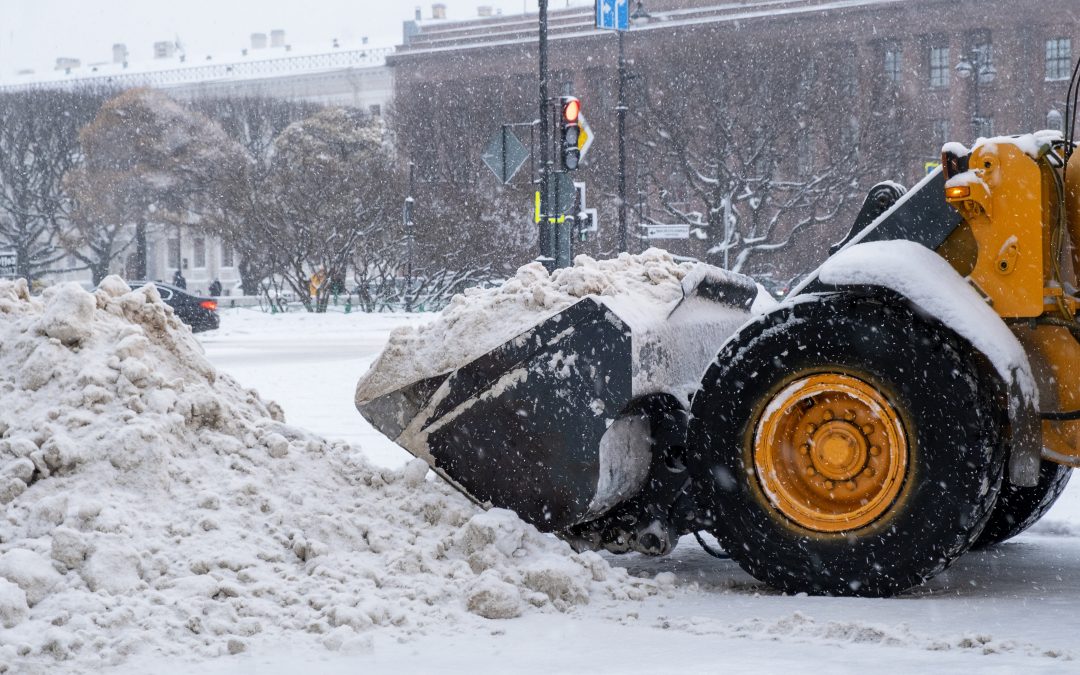
Snow plow trucks are the primary workhorses of commercial snow removal. These vehicles are designed to clear large surface areas quickly, making them ideal for:
- Parking lots
- Drive aisles and access roads
- Fire lanes and perimeter routes
Modern snow plow truck services use heavy-duty trucks equipped with front-mounted plows, wing plows, and salt spreaders. This allows operators to plow and apply deicing materials in a single pass, increasing efficiency during active snowfall.
According to the Federal Highway Administration, continuous plowing during storms prevents snow from compacting into ice, which can reduce clearing time by up to 30% compared to delayed response.
Limitations of Plow Trucks
While essential, plow trucks cannot handle every area of a commercial property. Tight spaces, islands, curbs, sidewalks, and loading docks require more maneuverable equipment. This is where skid steers and on-site crews become critical.
Skid Steer Snow Removal: Precision and Power in Tight Spaces
Why Skid Steers Are Essential
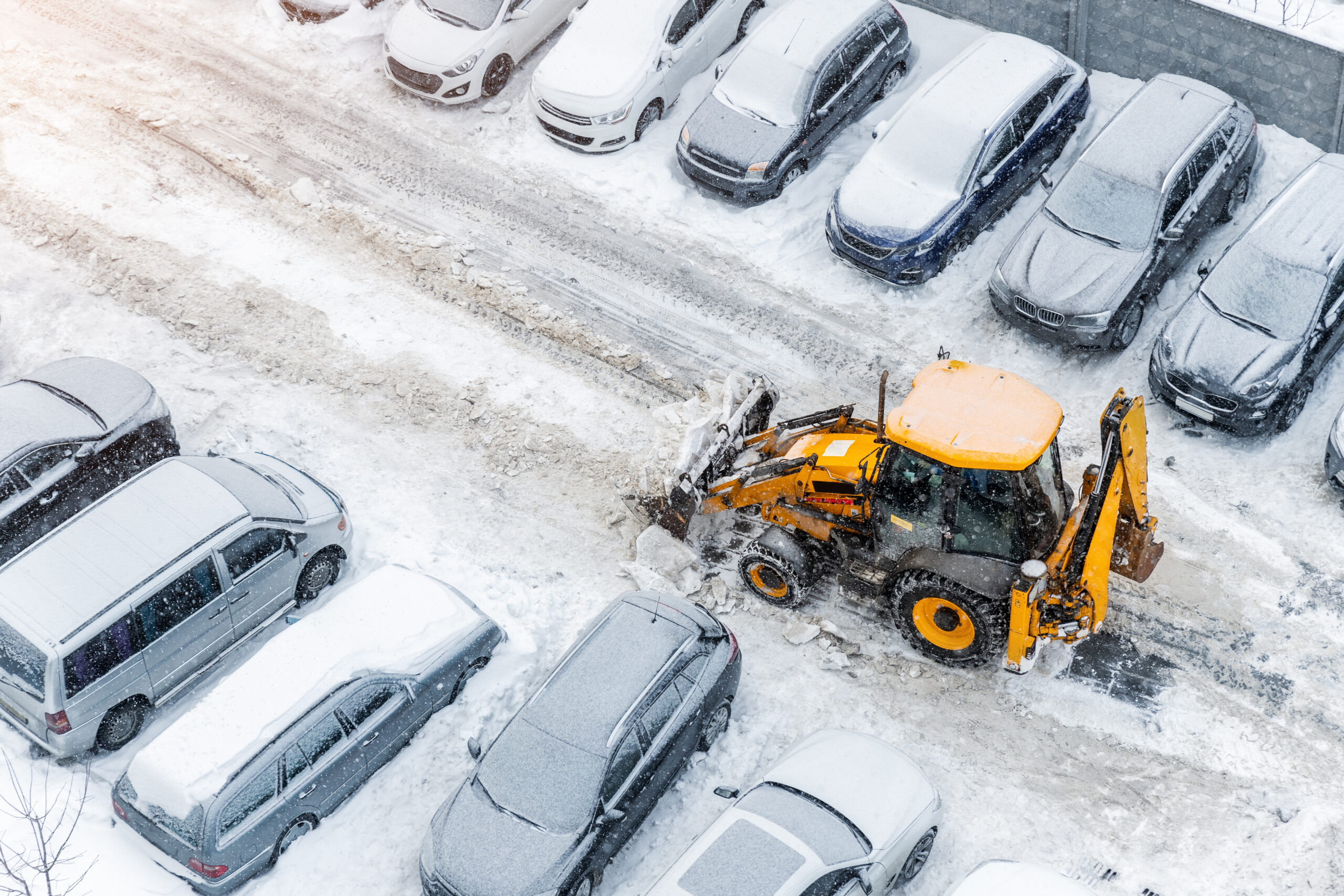
Skid steer snow removal fills the gap between large plow trucks and manual labor. Skid steers are compact, powerful machines capable of pushing heavy snow in confined or complex areas, including:
- Parking lot corners and islands
- Loading docks
- Dumpster enclosures
- Interior courtyards
Their tight turning radius allows operators to move snow where trucks cannot, preventing buildup in problem areas that often become ice hazards later in the season.
From experience, skid steers are especially valuable in Denver properties with older layouts or limited space, where plow trucks alone cannot provide full coverage.
Attachments That Increase Efficiency
Skid steers can be outfitted with:
- Snow pushers for heavy accumulation
- Buckets for snow relocation
- Brooms for light snow and fine cleanup
This versatility makes them one of the most effective tools in commercial snow removal equipment fleets.
On-Site Crews: The Human Element of Snow Removal
Why Crews Are Still Essential
Even the best equipment cannot replace trained on-site crews. Crews handle areas that machines cannot safely or effectively reach, including:
- Sidewalks and stairs
- Building entrances
- Ramps and curb cuts
- ADA-accessible routes
The Occupational Safety and Health Administration (OSHA) reports that slips, trips, and falls account for over 20% of workplace injuries, with icy walkways being a primary cause during winter months. Dedicated sidewalk crews play a critical role in reducing these risks.
Coordinating Crews With Equipment
Professional commercial snow services coordinate crews alongside plow trucks and skid steers rather than after them. This simultaneous approach ensures:
- Entrances remain accessible during plowing
- Pedestrian routes are not buried by windrows
- Ice control begins immediately after clearing
From firsthand experience, properties with integrated crew-and-equipment strategies see fewer complaints and faster stabilization during storms.
How Equipment and Crews Work Together During Storms
Pre-Storm Staging and Preparation
Before snow begins, equipment is staged, and crews are scheduled based on forecast severity. The National Weather Service emphasizes that proactive staging improves response times during rapidly intensifying storms.
Pre-treatment with liquid deicers is often applied using truck-mounted sprayers, reducing ice bonding by up to 75%, according to the Federal Highway Administration. Learn more about effective deicing in our guide to ice management for commercial properties.
Active Storm Operations
During snowfall:
- Plow trucks keep main routes open
- Skid steers manage accumulation in tight areas
- Crews clear walkways and entrances continuously
This layered approach prevents bottlenecks and ensures no area is neglected as conditions evolve.
Post-Storm Cleanup and Ice Control
After snowfall ends, equipment and crews focus on:
- Snow pile relocation
- Clearing drains to prevent refreeze
- Applying targeted deicing materials
The Insurance Information Institute identifies post-storm refreeze as a major contributor to slip-and-fall claims, reinforcing the importance of thorough cleanup.
Equipment Capacity and Reliability During Prolonged Winters
Why Fleet Size Matters
Denver winters often involve back-to-back storms. Providers with limited equipment may perform adequately early in the season but struggle during prolonged demand. Reliable commercial snow services maintain:
- Multiple plow trucks
- Dedicated skid steers
- Backup equipment for breakdowns
SIMA reports that properties serviced by well-equipped contractors experience up to 40% fewer winter-related incidents compared to those with limited resources.
Maintenance and Readiness
Equipment reliability depends on off-season maintenance and in-season inspections. Well-maintained fleets reduce downtime and ensure consistent service during peak winter conditions.
Choosing a Provider Based on Equipment and Crew Capability
What Property Managers Should Look For
When evaluating commercial snow services, ask about:
- Types and quantity of snow removal equipment
- Use of skid steer snow removal for tight areas
- Dedicated sidewalk and entrance crews
- Equipment staging during storms
Capability-driven providers are transparent about their resources and how they deploy them.
Local Denver Experience Matters
Denver’s elevation and rapid temperature swings require equipment strategies tailored to local conditions. Contractors unfamiliar with these challenges may underperform despite having the right machines.
Frequently Asked Questions About Commercial Snow Removal Equipment
Why can’t plow trucks handle everything?
Plow trucks are ideal for large areas but cannot safely access tight spaces, sidewalks, or entrances without causing damage or leaving hazards.
Are skid steers necessary for smaller properties?
Yes. Even smaller commercial sites often have tight areas where skid steers provide better control and efficiency.
Do on-site crews work during storms?
Yes. Crews often work simultaneously with equipment to keep pedestrian areas accessible throughout snowfall.
How does equipment choice affect liability?
Proper equipment reduces missed areas, ice buildup, and response delays, all of which lower slip-and-fall risk.
Is more equipment always better?
Not necessarily. The right mix of equipment, matched to the property layout, is more important than sheer volume.
Effective winter service is not accidental—it is engineered. The combination of snow plow truck services, skid steer snow removal, and trained on-site crews allows commercial properties to remain accessible, safe, and operational throughout Denver’s demanding winter season. When snow removal equipment is selected strategically and deployed by experienced professionals, businesses gain confidence that winter weather will not disrupt daily operations or compromise safety.